Showing posts with label BFZ Book Reviews. Show all posts

Tuesday, July 7, 2015

Book Review for : The Player of Games by Iain Banks


Follow me on Facebook, YouTube, and Twitter!


Product Details


Description 
The Culture - a human/machine symbiotic society - has thrown up many great Game Players, and one of the greatest is Gurgeh. Jernau Morat Gurgeh. The Player of Games. Master of every board, computer and strategy. Bored with success, Gurgeh travels to the Empire of Azad, cruel and incredibly wealthy, to try their fabulous game...a game so complex, so like life itself, that the winner becomes emperor. Mocked, blackmailed, almost murdered, Gurgeh accepts the game, and with it the challenge of his life - and very possibly his death.

Best5Zach's Thoughts

I don't think it's any secret that I read Sci-Fi almost exclusively. In particular, works that center on action and technology are my favorite. 

As I typically do, this book was one that I randomly picked up in B&N. I mean that in all honesty. I picked it at random, read the description, and looked up the reviews on Amazon. My wife has been telling me to move out of my comfort zone. Well, according to the description, this was a move away...even if ever so slight. So, based on the outstanding reviews, I took a chance. 

Let me first say that the book WAS very entertaining. I read it very fast because I was drawn into it. 

However, I was left with a feeling that this could have been a plot from a Star Trek episode. Gurgeh is the greatest over-all game player in the Culture. It is his life's work. The basic premise of the novel is that Gurgeh is being sent to participate in what is essentially a holy game for a newly discovered alien race that could pose a threat to the Culture. And, he is going to do so purely as an exhibition. Though he wouldn't have considered it otherwise, a plot twist forces his hand into going. 

As I said, the book kept me fascinated enough to finish it in only a few days, but even from the onset of the plot, I had a serious issue. I will try not to spoil it, but would like to elaborate at the plot holes.

Gurgeh is the best gamer in the culture for a reason. He is calculative. He knows the risks. He runs all the scenarios. And, despite that, he wonders haplessly into a trap where is his first set up, then forced to take this mission. Why? As a gamer, he draws all of his excitement and accomplishment from playing the games and winning on his own, yet his downfall is completely contrary to his very character who knows all the possibilities and risks. 

Furthermore, when he is set up, taking this mission to Azad isn't the only possible solution to the problem, yet, we are made to think it is. It was very obvious that there were a handful of ways that Gurgeh could have avoided this, considering how desperate he was to avoid going to play Azad. 

Secondly, I have a large issue that an empire, whose very basis is built on this game, would ever consider letting an outsider play, even in a exhibitionist capacity. We are led to believe that there had been little to no contact between the two races and yet Gurgeh is allowed to participate in a holy game where the stakes are grand, from political positions to the seat of the emperor. 

Ok, so we overlook that possibility. It becomes fairly clear that in order for the empire and the culture to let Gurgeh participate, something must be on the line, yet both sides pretend that there isn't. Gurgeh wonders himself. Although he is slightly off on his assumptions, he does think that one side...or both....are setting him up. As if he is a pawn in a much greater game.

The last 50 pages were about as abstract and random as could be with several major plot twists that made little to no sense. The ending itself was pretty predictable, that is, what was really going on and why Gurgeh was forced into the situation. But the particulars surrounding it seemed to make no sense. 

I do appreciate the parallels that the author is trying to make about the class between different cultures. In particular, the liberal ideals and how a culture can benefit from removing all things taboo by accepting everything. In this case, the empire of Azad is portrayed to be a classically conservative race on the outside, while being corrupt on the inside by their true liberal ideals. And, that ends up being their undoing. While I appreciate the story-within-the-story, there were also some major logic gaps in that argument. 

Anyway, a good book. Entertaining. But, some serious issues with plot drivers. Additionally, the points that the author is trying to make between conservative and liberal societies is interesting, but misguided. 

Friday, March 27, 2015

Book Review for "The Old Man and the Wasteland" by Nick Cole


Follow me on Facebook, YouTube, and Twitter!


  • Paperback: 148 pages
  • Publisher: CreateSpace Independent Publishing Platform (April 5, 2011)
  • Language: English
  • ISBN-10: 1461076382
  • ISBN-13: 978-1461076384
  • Product Dimensions: 9 x 6 x 0.3 inches
  • Shipping Weight: 8.8 ounces
  • Average Customer Review: 4.4 out of 5 stars  See all reviews (937 customer reviews)
  • Amazon Best Sellers Rank: #1,003,367 in Books (See Top 100 in Books)

"Forty years after the destruction of civilization... Man is reduced to salvaging the ruins of a broken world. One man’s most prized possession is Hemingway’s Classic ‘The Old Man and the Sea.’ With the words of the novel echoing across the wasteland, a survivor of the Nuclear Holocaust journeys into the unknown to break a curse. What follows is an incredible tale of survival and endurance. One man must survive the desert wilderness and mankind gone savage to discover the truth of Hemingway’s classic tale of man versus nature. Part Hemingway, part Cormac McCarthy’s The Road, a suspenseful odyssey into the dark heart of the Post-Apocalyptic American southwest. A book lover’s action flick."

With my reading history, this book kept popping up in my suggested reading. It soon became one of my most anticipated reads....but not because of what you think.  Eventually I bought it. And waited. And waited. And waited. And a month later, I emailed the seller only to find that they never shipped it. So, I ordered again. It showed up a few days later. At that point, I was foaming at the mouth to read it.

As luck would have it, I had some 2nd shift radiography work, which meant a lot of slow time. I read this book over the course of two evenings. 

So, as it has been mentioned above, this work borrows heavily from Cormac McCarthey's The Road, which I reviewed and you can read about it here. Suffice to say, The Road is one of my all-time favorites, though it is an extremely depressing work. However, The Road is the most realistic expectation for the end of the world that I have found. Not only does the realism surround people's behavior, but the expected effects on the environment of some sort of large scale NBC attack.

The book was very interesting, straightforward, and easy to read. I certainly enjoyed it. However, there is nothing unique about it, other than it is fairly well written for content, though the plot is not deep. Obviously it is more of a short story, as 

The Old Man and the Wasteland follows the same road, but not to such an extent.It is a PG-13 edition of The Road.  Instead of 9 or ten years after the extinction event, the Old Man takes place 40+ years in the future after the event.  The environment is harsh, but not as harsh as The Road. In The Road, flora and fauna are all but extinct. The Old Man takes place in the Arizona desert, but other than references to fallout in other cities, the natural environment is the real challenge. The people are harsh, but also not as harsh as The Road. Though The Old Man deals with some unsavory characters, some that are as wild as animals, you can't help notice that, unlike the Road, he comes from a settlement. And, The Old Man talks of OTHER settlements. The people in these settlements work together in harmony. In The Road, there are no settlements, and every single person they come into contact with, or make mention of, is a savage bent on survival by any means necessary, notably cannibalism. Rape and murder are a rampant theme in The Road, where these acts could happen at any time. There is never any fanfare or lead up to that. If the man and his child are ever found, it is taken as gospel that these things will happen.  Although this book makes mention of that, it doesn't seem to as likely a threat to the old man. In both of his contacts with outsiders, his immediate response to seeing and meeting people is one of cautious optimize instead of shear terror. In The Road, killing people before they ever see you is a likely measure for preservation. In The Old Man, killing is never really considered, and the Man does nearly anything to avoid it. 

Like The Road, the main plot driver isn't the main character, but a child. Though the man (in both stories) has self-preservation on his mind, his thoughts and actions are almost always on and for the child. In The Road, the man is protecting his son. In The Old Man, the Man's reason to exist is his granddaughter. Neither has any desire to live for themselves, and the thoughts of suicide are always prevalent, though the Old Man considers only the idea of suffering from injury, where as the Man from The Road considers it as a release from the harsh environs that they must endure. 

As I have stated many times, The Old Man mirrors The Road, but it is almost polarizing, as if done on purpose. 

The landscape on in The Road takes place on the east coast, in areas that would have been considered the temperate heartland of America. However, the effects on the environment have made it a desolate and cold place, devoid of any sustenance. Hunger is the main concern and water is not. Conversely, The Old Man takes place in the Arizona desert, where the land has always been harsh and hot. However, necessity has caused the Old Man to learn to live on the land, particularly on the lands natural inhabitants like snake. Going hungry is never really an issue, though water is constantly on the Old Man's mind. 

Both of the men in the stories carry revolvers. The man in The Road starts with 2 bullets which he refers to as one for him and one for the boy. Eventually he discharges one to save them, leaving him with just one for the remainder of the book. The Old Man starts the novel with 5 bullets, leaving one empty slot in his revolver. He refuses to use it on men. It may mean nothing, but to me, the number of shots each man has and how he chooses to use them shows parity between the two works. 

Both men find an oasis of sorts. In The Road, the man chooses to leave it entirely and permanently and make his way to the coast, though the sustenance he leaves behind is more than he ever has in the book. In The Old Man, the Old Man also chooses to leave, but to bring his people BACK to the place.

In both works, the men die of what we assume is sudden onset organ failure brought on by radiation-induced cancer within hours of accomplishing their goals and we are left with the child becoming the focus of the work, though they were not the main character. 

The man in The Road has an inner monologue that is extremely negative and hopeless. Paired with the gloomy and dark landscape, the read is very depressing and bleak. He expects the worst from ever situation and the situation is always cold and dark.  The Old Man, despite being in his 60s, usually has a bright outlook, considering his situation. Similarly, nature around him is bright and warm, creating a very different feel. 

As with The Road, the how and why of the apocalypse really aren't given, which allows for a streamlined design with few questions or possibilities of plot holes. It does leave the reader with many questions on the past, specifically on WHY the Old Man has become an outcast (the reason is hinted at a Hot Radio) just as The Road has an event with the Man's wife leaving which leads us to assume that this is the reason for taking to The Road. 

I could think of more polarizing ideas, but you get the idea.

Overall, it was an easy read that kept me very focused, though the mental load is light. Although The Road leads readers to a lot of internal reflection and speculation, The Old Man is just a fun read. I have made the assumption that this was a short story that the writer hoped to wager into a full blown novel at some point. It left a lot of open ends on both sides.

Of course I was left with a lot of questions on just how much realism was in this work. My main question was this:  Why was the man so unwilling to kill others when he almost always knew what the outcome would be? Even in situations where he had ample opportunity to end it, he didn't and instead forced himself into even more grave danger. Surely, he would have dealt with these situations in his 40 years in the wasteland.

Anyway, a fun and easy read. 

I give it 3.5 Stars. 

Monday, January 26, 2015

Book Review for Annihilation: A Novel (The Southern Reach Trilogy) by Jeff VanderMeer

Follow me on Facebook, YouTube, and Twitter!
Read about all of my Book Reviews!


Product Details


"Area X has been cut off from the rest of the continent for decades. Nature has reclaimed the last vestiges of human civilization. The first expedition returned with reports of a pristine, Edenic landscape; the second expedition ended in mass suicide, the third expedition in a hail of gunfire as its members turned on one another. The members of the eleventh expedition returned as shadows of their former selves, and within weeks, all had died of cancer. In Annihilation, the first volume of Jeff VanderMeer's Southern Reach trilogy, we join the twelfth expedition. The group is made up of four women: an anthropologist; a surveyor; a psychologist, the de facto leader; and our narrator, a biologist. Their mission is to map the terrain, record all observations of their surroundings and of one anotioner, and, above all, avoid being contaminated by Area X itself. They arrive expecting the unexpected, and Area X delivers—they discover a massive topographic anomaly and life forms that surpass understanding—but it’s the surprises that came across the border with them and the secrets the expedition members are keeping from one another that change everything."

So, I once again utilized Amazon to search for and purchase a book. This one carried a 4 out of 5 star review, over the course of 460 reviews. Pretty good, right? So, I bought this book without actually reading a user review. Now, I admit that sometimes people give unfair review of literature. Sometimes a book doesn't read like they would like. Or it ends in a way they don't like. Sometimes, books are too simple. Or too difficult. So, I usually avoid reading the actual reviews because I don't want a few people to taint the book or give something away. One of these days, I am going to learn to not go on the average Stars awarded and read a random set of reviews. It seems to me that if you look at the first reviews, they are always stellar. It's almost like the writer's family and friends write the first reviews. Only later do you start seeing the more realistic reviews.

Ok, so I say all that and haven't talked about the book.

I read the description above and thought it sounded interesting. I noted that having an all female cast would be...different....for me. But, I was open to new experiences. I can't recall the last time I read a first-person narrative of a female. I have read several books, namely "Titan" where the lead character is a female.  This book certainly sounded like it comes from the "big dumb ship" idea, where characters are introduced to an entirely new (at least temporary) environment in which they know nothing about. For some reason, that type of literature always appeals to me, as I try to figure out what they are seeing before they realize just what it is.

Regarding the POV of a woman heroine....if some of the lines were left out of the book, you would never know it was a woman. In fact, it reads just like a male. The character is flat. She exhibits little to no emotion, even in her back-story about her dead husband. She is very calculative and scientific. I felt that her personality was force-fed to me. I had to be convinced on who she was at times and this was done through back-story and not during the action of the book.

This book certainly started off just as I expected, with the 4 women explorers traipsing around an unknown environment. They had been given little to no information on what the other expeditions had seen or experienced. They were given very basic understanding of the environment in which previous expeditions had already encountered, leading me to question "why." The easiest assumption is that this is some sort of government experiment.

The explorers encounter many things they do understand, such as ruins of towns and typical flora and fauna. We are never told WHY they encounter such things, and if they matter. Just that they are there and are not entirely important. Though, readers like me will realize that very little is every written that doesn't matter, so we file it away. Soon they begin to encounter things they do not understand. These things are outlandish and strange and totally incomprehensible to the explorers. They do their best to explain it their limited ability, like a toddler explaining long division. Shortly after encountering some inexplicable findings (for the explorers), we discover that the explorers are all victims to deep hypnosis. Because we are limited by the main character's understanding, we are left with the impression that this was done in order to ensure mission success, but also left with the deep question that all of the unexplained MAY BE explainable, just incomprehensible to the heroine due to the mental conditioning. Surely, however, all things will come to light.

Sprinkled into the heroine's narrative are seemingly out-of-place recollections. Again, a reader is left with the impression that these must somehow figure into the plot. For example, we wonder if, through these recollections, we will ever find out what happened to the other expeditions. After all, the back cover talks about a whole expedition dying from cancer, but no more is ever offered in the book OTHER than simply stating they died from cancer. In the end, these flashbacks offer no real information other than very basic knowledge of the heroine's husbands demise.

The books spirals into the surreal. By the end of the book, the heroine is experiencing things she doesn't even begin to comprehend, both about herself, the past expeditions, and her surroundings. It was like trying to understand a raving lunatic on acid explaining the colors she sees. I kept trying to read her description of things and think: "Oh, she is explaining a deer. She just saw a deer for the first time and didn't have the vocabulary to explain it." Except that she is trying to explain monsters.

By the end of the book, I found myself wondering just what I was reading. Everything that had been written up until that point was in question. To me, the entire book read like someone's far-fetched dream. A dream that made sense while asleep, and then they tried to wake up and write it all down and remember the exactness of it, it didn't make much sense. Like, how could THIS be if THAT happened? Only few things were in focus and the rest of the details were hazy and unclear.

If you are like me, you will read down to the last page hoping that someone will explain things. I honestly got down to the next to last page, and as I flipped it over, I thought it would be a single paragraph that said something like:

"They were all dead and in purgatory." or "They were abducted by aliens and selectively memory wiped and being watched for their interactions with a seemingly foreign environment." 

Alas, the book just ended.

Whenever reading a book, you have some basis and boundaries of realism. By the end of this book, you are unsure of anything real. There were no real boundaries set. Nothing was sure to have happened or to exist.  Does Area X even exist? Does the heroine exist and if any of this story is being told from a sane person's point of view. Insanity is certainly hinted at strongly in this book. Most importantly, what was the reason for the expedition? 

So, if you go read the reviews, you will see much of the same. It is 208 pages meant to confuse you, keep you guessing, and make you purchase another book. I don't mind those, usually, but I like to know where we are headed. I am sure that by the end of the 3rd book, we will know what happened to her and her husband. We will know what the "crawler" is. We will know WHY the government sent all the expeditions. We will understand what Area X is. I can't help but think this is a scenario where a writer went into this knowing he wanted to sell 3 different books, but only had the ideas for 1, so he strung together some stuff to bait people to keep buying.  I had to work my noodle a whole lot and produced nothing. While entertaining, I was not entertained. Does that make sense? No? Then you understand how I feel.


Friday, January 9, 2015

Book Review for "Ready Player One"

Follow me on Facebook, YouTube, and Twitter!
Read about all of my Book Reviews!


"In the year 2044, reality is an ugly place. The only time teenage Wade Watts really feels alive is when he's jacked into the virtual utopia known as the OASIS. Wade's devoted his life to studying the puzzles hidden within this world's digital confines—puzzles that are based on their creator's obsession with the pop culture of decades past and that promise massive power and fortune to whoever can unlock them. 
   But when Wade stumbles upon the first clue, he finds himself beset by players willing to kill to take this ultimate prize. The race is on, and if Wade's going to survive, he'll have to win—and confront the real world he's always been so desperate to escape."

I admit that I was skeptical of purchasing this book. I had read "Snowcrash" a few years ago, and many people had said that the two books were similar in nature. Specifically that almost the entirety of the novel took place in a virtual reality. In both works, the protagonist is a young and poor kid who does just enough in real life to survive in attempt to live in the VR world. "Snowcrash" was hard for me to identify with and follow, so I wasn't sure how I would like this one. 

Initially it was hard to identify with the work because I have never been much of a gamer. Playing video games has been an activity that I enjoy only when there is absolutely nothing else to do. I do realize that I grew up and still currently live in rural America where I can enjoy the outdoors. Considering that the majority of the plot revolved around video games, I was worried if I could follow it.

But what hooked me, like many others, was the fixation on the 1980s and how the pop-culture of the era defined the plot. Though I was a young child, much of this book reminded me of my childhood, so it was easy to identify with the plot's twists and turns, which were dictated by this decade, and not solely by video games. 

After a few chapters that were fairly slow, the book picked up a break-neck pace following the search for the fabled treasure. 

I won't go into the plot, but despite not having any major hooks, the story kept me fixated to the very end, which was a pretty predictable yet satisfying one.  There were some aspects of the plot I thought were tacky or loose. Overall, it was a solid plot. 

I read this book in 4 days and would have read it faster if I could. 

I have very high praise for this book. Though I have nothing in common with the protagonist, his plight is well laid out and understandable. His character, as well as most of the others, are well developed yet predictable. He was portrayed as loyal, resourceful, and very human. Unlike many works, I could picture him and know his reactions before he actually did them because I became very understanding of Wade. 

Despite being a story fixated on finding a treasure inside a VR world with nothing but 70s and 80s knowledge, the book shared some very interesting life lessons and also painted a very real picture of the future of the human condition. I think I found that to be the most impressive aspect of this book. That is, it taught it's readers a lesson about what our future could be like and why we should try and avoid it...but without beating us over the head with it. It was very subtle, yet very effective. 

I have to say that it is one of the best pieces I have read. 

4.5 out of 5 Stars. 

Monday, December 29, 2014

Book Review for The Martian by Andy Weir


You can find this book on Amazon HERE

  • Paperback: 387 pages
  • Publisher: Broadway Books; Reprint edition (October 28, 2014)
  • Language: English
  • ISBN-10: 0553418025
  • ISBN-13: 978-0553418026
  • Product Dimensions: 5.2 x 0.8 x 8 inches
  • Shipping Weight: 9.6 ounces (View shipping rates and policies)
  • Average Customer Review: 4.6 out of 5 stars  See all reviews (6,239 customer reviews)
  • Amazon Best Sellers Rank: #198 in Books (See Top 100 in Books)
  • "Remember Man Plus, Frederik Pohl’s award-winning 1976 novel about a cyborg astronaut who’s sent, alone, to Mars? Imagine, instead, that the astronaut was just a regular guy, part of a team sent to the red planet, and that, through a series of tragic events, he’s left behind, stranded and facing certain death. That’s the premise of this gripping and (given its subject matter) startlingly plausible novel. The story is told mostly through the log entries of astronaut Mark Watney, chronicling his efforts to survive: making the prefab habitat livable and finding a way to grow food, make water, and get himself off the planet. Interspersed among the log entries are sections told from the point of view of the NASA specialists, back on Earth, who discover that Watney is not dead (as everyone assumed) and scramble together a rescue plan. There are some inevitable similarities between the book and the 1964 movie Robinson Crusoe on Mars, but where the movie was a broad sci-fi adventure, the novel is a tightly constructed and completely believable story of a man’s ingenuity and strength in the face of seemingly insurmountable odds. Riveting". --David Pitt --This text refers to the Hardcover edition.

I honestly can't recall who recommended this book to me. I am sure it was someone that works with me here at NASA. Whoever it was, was browsing my book selection in my office and noted that I had several works from Ben Bova, such as "Mars" and "Return to Mars." They gave me the idea to look up this book. 

I did some research, and the NUMBER ONE THING to know is...don't buy "The Review Summary." It is NOT the book you are looking for. 

One of the top ideas I have for a future literary work involves a Robinson Crusoe-type adventure to another planet. I'd be a liar if my idea wasn't almost EXACTLY what Weir has laid down in print. He starts with a creative NASA mechanical engineer with a crude sense of humor and a powerful will to survive. Sound familiar? Yep. Just like me. 

Though Weir isn't involved in space travel, he has a pretty solid command of how things work, and it is demonstrated in the knowledge of the technology and solutions that would be used in future NASA missions to other planets. 

This book had a very good pace with little to no down time. Watney was constantly being challenged in order to survive. What I really liked about this book was how each challenge was laid out so that the reader understood both the problem and the solution. That brings me to the drawback of this work. Watney's life is a day-after-day struggle, where he is presented with catastrophe. While his survival is well explained and detailed, reality is that an astronaut will never survive such a series of events. Even some of the solutions are sketchy, at best. In particular, the rendering of hydrazine for it's water content is borderline lunacy. Additionally, the final solution to save Watney was far-fetched. However, it was very entertaining. 

From a reader's perspective, I did not like the random 3rd person narrative point of view that cropped up whenever Watney was about to experience something catastrophic, such as having an airlock explode. Though using Watney as the sole narrator would have been difficult, it would have been more seamless. Additionally, the cutaways to his coworkers could have been eliminated. However, I do understated that this book was very short and much of this was used to thicken work, though I don't think it added any value. While Watney came off as a corny individual, it went overboard at parts. Some of the one-liners and expletives were over the top and unneeded. 

Overall, the book was very entertaining and painted a very real picture of what survival in the most hostel of environments would be like. For the most part, it was realistic. The problems and solutions were well explained and done so in an entertaining way. The book was far from perfect, but was a very good read. I give it 3.5 out of 5 Stars

Friday, July 18, 2014

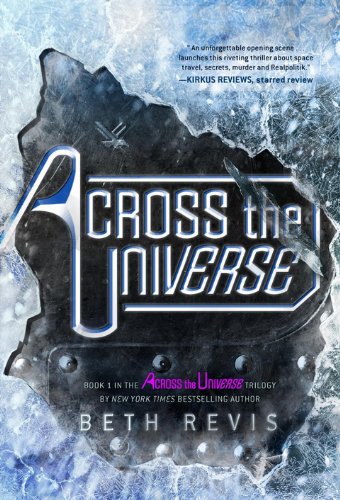
Book Review for "Across the Universe" by Beth Revis


Find it here on Amazon!


"Amy is a cryogenically frozen passenger aboard the spaceship Godspeed. She has left her boyfriend, friends--and planet--behind to join her parents as a member of Project Ark Ship. Amy and her parents believe they will wake on a new planet, Centauri-Earth, three hundred years in the future. But fifty years before Godspeed's scheduled landing, cryo chamber 42 is mysteriously unplugged, and Amy is violently woken from her frozen slumber.

Someone tried to murder her.

Now, Amy is caught inside an enclosed world where nothing makes sense. Godspeed's 2,312 passengers have forfeited all control to Eldest, a tyrannical and frightening leader. And Elder, Eldest's rebellious teenage heir, is both fascinated with Amy and eager to discover whether he has what it takes to lead.

Amy desperately wants to trust Elder. But should she put her faith in a boy who has never seen life outside the ship's cold metal walls? All Amy knows is that she and Elder must race to unlock Godspeed's hidden secrets before whoever woke her tries to kill again."


As I usually do I picked this book up used because of a combination of cover art and book description. Using Amazon, I found that it was rated 4-Stars out of over 450 reviews. 

You can find a full description of this book on Amazon by clicking this link

I just put this book down after finishing it, though I admit that it took me some time. It was a combination of several different typical sci-fi plots. There is very little action, though the book isn't slow, per se. There isn't any real dead periods in the book and each and every chapter gives a little more insight into the plot, though it is quick to give another plot hanger to make you keep reading. 

Though it is classified as Sci-Fi and its title suggest that it is about a trip across space, little of the plot truly revolves around any science fiction. Instead, it is actually a whodunit mystery that happens to take place on a ship traveling across the Universe. 

The book is narrated by two different characters: Amy and Elder. Considering that there are only 6 characters who have anything to do with the plot, it felt like the writer was giving a lot away by sharing both perspectives. Out of those 6, really only 3 of the characters are developed in any capacity. 

Though the writer tries to subtly give away hints throughout the book, the clues were fairly clumsy and I had the plot solved very early. At some points, I already knew what the next earth-shattering clue would be before it was ever given. So early that I thought "surely there would be a wild ending". But there wasn't. It was totally predictable and  I spent more time trying to figure out how I could be duped in some crazy plot twist on the next page than assuming I had it figured out. 

That isn't to say the book isn't worth reading nor that it was boring. Sadly, what kept me reading was the hope that I wasn't right in nailing the plot in the first 50 pages. It kept me excited enough to read it in its entirety, though I was totally let down in the end. Since half the battle is being entertained, I have to award it 2.5 Stars. 

Tuesday, June 17, 2014

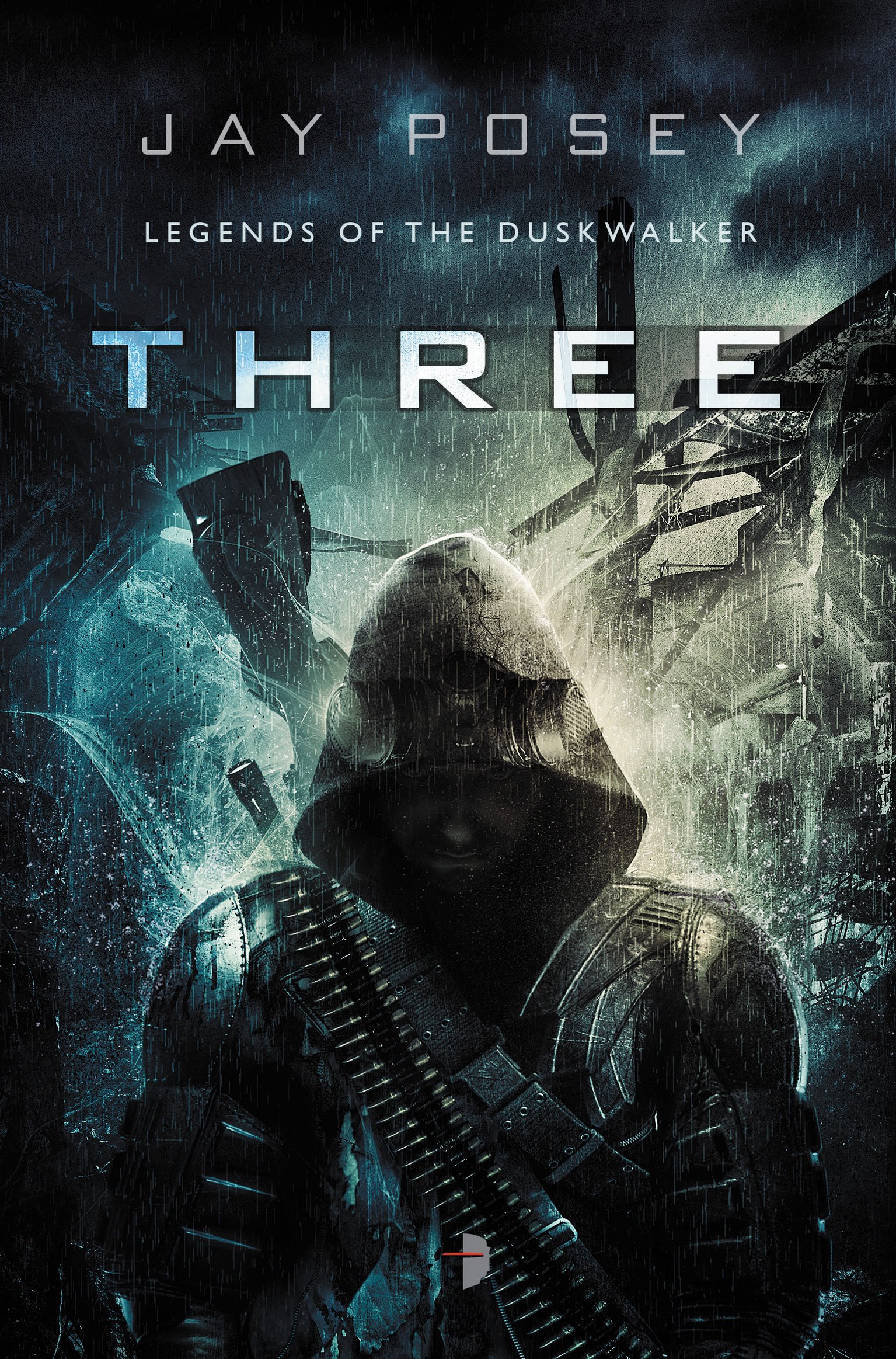
Book Review for Jay Posey's "Three: Legends of the Duskwalker"


As many of you may recall, I am frequently a visual buyer. When I shop at book stores, I usually pick up books based upon the cover, even though we are all aware of the old saying.

Luckily, we have an Amazon app that allows me to see the reviews. I do caution about judging books on these reviews alone. But, if it's 4 stars or higher and has been reviewed by 50 or more people, it's usually safe to give it a try.

So, I was at B&N before a work trip (the only time I ever frequent such places anymore). I saw the cover and it didn't have a title that disgusted me. I can't really quantify WHAT that means, but if it has a name that is obviously meant to be catchy, I usually put the book down. But the title was simple. The reviews were good and the description said this:

"The world has collapsed, and there are no heroes any more.
But when a lone gunman reluctantly accepts the mantel of protector to a young boy and his dying mother against the forces that pursue them, a hero may yet arise"


The editorial reviews said:

"Stark and powerful, THREE is a stunning debut. Reinventing the post-apocalyptic western as a journey across interior badlands as dangerous as the cyborg-haunted terrain his hero must cross, Posey has crafted a story that is impossible to put down."
- Richard E. Dansky, author of Snowbird Gothic

"Three feels like the result of tossing Mad Max, Neuromancer and Metal Gear Solid into a blender. If you don't find that combination appealing, then I do not understand you as a human being."
-Anthony Burch, writer for Borderlands 2 and Hey Ash Watcha Playin

"Jay Posey creates a vivid and mesmerizing world whose characters are so real and so flawed that you'll recognize them immediately.  An unforgettable read."
-Peter Telep, co-author of the #1 NY Times Bestseller Against All Enemies

"A post-apocalyptic road yarn sure to yank your trigger and tug at your heart."
- Matt Forbeck, author of Amortals and Dangerous Games

"... there’s no doubt that Posey is someone to defi
nitely watch as a rising star with this debut."
- www.birthofanewwitch.wordpress.com

Why not. I gave it a try.

The book started very similar to most post apocalyptic works featuring a scavenger/survivor. It portrayed a hard, razors edge man who only looked after himself. Three has a past that has given him all the tools he needs to provide from himself, whether that's scavenging or taking jobs. In this case, he has a bounty to collect. He strolls into town with his loot and is trying to spend some down time. Sound familiar? Try "Waterworld" and "Book of Eli".

But, he finds himself offering help to two strangers despite a lifetime of experience telling him to walk away. Each step he takes down this path draws him deeper into the plot of a conflict not his own. What starts out as helping two innocent strangers in needs leads down a darker and broader path than he could have imagined. And, he finds himself being pushed from a loner without a need to help anyone at anytime to a man devoted to becoming a hero, despite himself.


What I Liked About This Book

  • There isn't a long lead in period into the action. You are given a glimpse of Three and his personality, then it leads immediately into the plot. 
  • That glimpse is brief and gives you the very basic information about Three. I don't like that authors try and reveal the character all at once in the beginning of the work. It's perfectly ok to reveal a character bit by bit. It gives a lot of anonymity of the character as well as surprise as you don't know how they will act all the time.
  • There is a lot of useful vagueness to the world. You get the impression of only seeing what Three sees. That isn't a lot, but it's just enough. 
  • The world is a very hostile place. Many times, as per the aforementioned movies, the world is only dangerous for everyone else. The hero always seems perfectly adapted
  • There is a lot of hand to hand combat and very few firearms. It gives a lot of realism to the fights
  • Heroes get hurt. In most works, the hero either never gets hurt, or when he does, it's nicks and cuts. Not this book
  • There are a lot of unanswered questions. These are about a multitude of subjects. Why is the world like this? Who is Three and why is he the way he is? What are the Weir?
  • Posey KNEW he would be writing more, so he left a lot of questions out there. I love that. Don't show all your cards in one piece then try and capitalize later. 
  • The world created was very unique, though it seemed to me to be borrowed from places, like "The Matrix"
What I Didn't Like About This Book
  • Like most every work, the hero bends and breaks his own rules. I don't just mean why he helped Cass at all, but a lot of the decisions in this book were backwards from how he would have done things
  • I disliked the end of this book. Read it and you will see why. 
  • Even though Posey liked leaving a lot of loose ends, there seemed to be way to many ends that were tied in the end. Many of the ends were obvious.
  • I have a hard time believing a character can change so rapidly after spending his whole life doing the OPPOSITE of what he does in the book.  
Conclusion

The book was non-stop action. I actually read it far faster than I typically read other works. The book was gritty, which I loved. The world that surrounds the plot is unique and unforgiving. Three is a unique character. He is a hard, razor's edge man that does have a code to live by. I'd love to read more about him. I will be picking up the other two books in this series soon. The plot twists and turns, sometimes contorting to the edge, but for the most part, keeps you guessing throughout. 


3.5 Stars

Friday, May 2, 2014

Book Review for "Alas, Babylon" by Pat Frank

For more information on this book, click this link to view it on Amazon.

This piece of literature will show up on any top lists of post-apocalyptic literature or classic science-fiction. It came up on a related search for "Lucifer's Hammer" for me.

Amazon has it rated under customer reviews as a 4.5 out of 5 stars based on almost 700 reviews.

Here is what Amazon has to say about the book in its description:

"Alas, Babylon." Those fateful words heralded the end. When a nuclear holocaust ravages the United States, a thousand years of civilization are stripped away overnight, and tens of millions of people are killed instantly. But for one small town in Florida, miraculously spared, the struggle is just beginning, as men and women of all backgrounds join together to confront the darkness. "

About the author, Pat Frank, Amazon has this to say:

"Pat Frank" was the lifelong nickname adopted by the American writer, newspaperman, and government consultant, who was born Harry Hart Frank (1908-1964), and who is remembered today almost exclusively for his post-apocalyptic novel Alas, Babylon. Before the publication of his first novel Mr. Adam launched his second career as novelist and independent writer, Frank spent many years as a journalist and information handler for several newspapers, agencies, and government bureaus. His fiction and nonfiction books, stories, and articles made good use of his years of experience observing government and military bureaucracy and its malfunctions, and the threat of nuclear proliferation and annihilation. After the success of Alas, Babylon, Frank concentrated on writing for magazines and journals, putting his beliefs and concerns to political use, and advising various government bodies. In 1960 he served as a member of the Democratic National Committee. In 1961, the year in which he received an American Heritage Foundation Award, he was consultant to the National Aeronautics and Space Council. From 1963 through 1964 the Department of Defense made use of Frank's expertise and advice, and this consultancy turned out to be his last response to his country's call. His other books include Mr. Adam and Forbidden Area."

I admit that I was originally put off on this book and it sat on my bookshelf, especially after having read "Lucifer's Hammer". While "Lucifer's Hammer" is a wonderful book, it doesn't translate very well to our more modern age, though it was published 18 years after "Alas, Babylon", which was first put on the shelves in 1959. "Alas" must have sat on my bookshelf for 3 years before I had exhausted my supply of new literature before a trip to Utah. So, I packed it for the trip.

Though "Lucifer's" suffered greatly in it's translation into the modern age because of the rapid changes in technology, the same can't be said for "Alas". Much of that is due to the nature of the plot, which surrounds type of plot driver and the location of the characters. The selection of locale was very intelligent, as it centers on an out-of-the-way town in Florida. Though the characters in this piece suffer many of the challenges that will be faced in a post-apocalyptic world, they are very small in scale and localized. For example, the climate of central to south Florida alleviates the challenges faced by pretty much every other geographical location in the world, namely winter and the ability to provide warmth and sustenance year-round. While it is very fortuitous for the characters, some readers my be put off by the lack of struggles faced by "real world" examples. But, as many authors have proven, and struggled with, the reality of writing in any other situation bends credibility because of the truth and harshness of nature. After all, authors want to write a lengthy story, and the reality of nature would prevent a writer from conveying their true message. 

What is the message the Frank was trying to convey? In my own opinion, it conveys that natural leaders will emerge. These leaders don't have to be pinnacles of the professional world, nor do they have to be militarily trained, though neither of these situations could hurt, as we see with the novels protagonist. Surviving such a world comes from being well-rounded and flexible in all facets of life. Most importantly, it proved that, despite whatever age we currently live in, we must be able to learn the lessons of past ages. One must be able to forget what modern technology affords us and quickly move on to providing for one's self by whatever means is afforded. 

I greatly enjoyed reading about how Randy stepped up as a leader of his community and quickly and efficiently surrounded himself with good people who had the skills he would need to survive. Randy was a very believable and very human character with flaws and strengths. The book provided almost every stereotypical issue that will arise in such a world, and while the solutions were often predicable, it reinforced the typical ideals conveyed in other such works.  For example, people will do whatever they must to survive, be it violence, theft, or deception. The body is a fragile item that must be given great care. The medicines and care givers that are the pinnacle of modernism will disappear overnight. One must quick to provide quick, even painful, solutions to medical issues or die. Perhaps most importantly, the work shows how the earlier proper choices in such a situation can provide exponential returns, if the proper course of action is taken. Specifically, Randy's decision to grow crops of sugar cane to make whiskey for bartering, would take months to see fulfilled, but it ultimately provided them an ample trade good.  


As stated, this book translated very well to our modern culture. I believe this is the case because, despite what "modern" technology may be, it will be rendered useless in the case of an EMP or nuclear bomb. This is a must read, no matter what your interest in reading may be.

5 Stars